
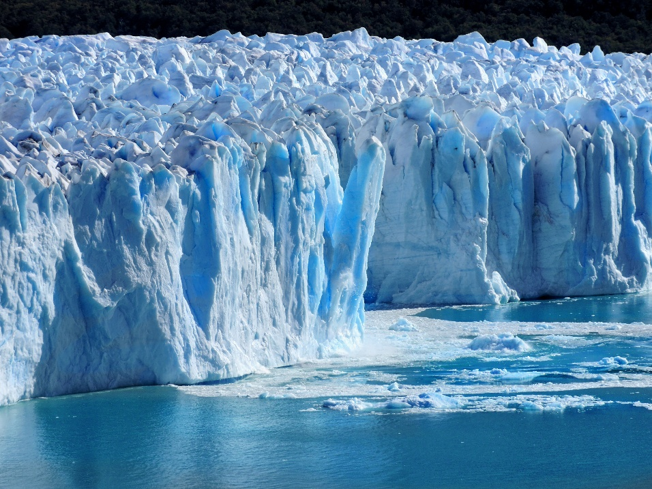
There is something deeply humbling about standing face-to-face with a glacier. They aren’t just static walls of ice, they groan, shift, and glow with an otherworldly blue light.
Because of climate change, these frozen giants are changing rapidly. The Alps alone have lost roughly 50% of their ice volume since 1931. There has never been a better, or more urgent time to see them responsibly.
Whether you want to comfortably view one from a panoramic train or strap on crampons (spiked footwear for ice) to trek across the crevasses, Europe has some of the most accessible ice fields on earth. Here are four incredible European glaciers to add to your travel bucket list.
1. Aletsch Glacier (Switzerland)
The Aletsch Glacier is the undisputed king of the Alps. Stretching 23 kilometers (14 miles) through the Bernese Oberland, this massive river of ice is so culturally and geologically significant that it’s protected as a UNESCO World Heritage site.
- The Experience: You don’t need to be an elite mountaineer to witness its scale. You can take a series of cable cars from the surrounding car-free villages (like Riederalp or Bettmeralp) up to viewpoints like the Eggishorn. From there, you can peer down at the sweeping curve of the ice.
- The Active Route: If you want to touch the ice, you can book a guided day-trek from Fiesch that safely leads you onto the edge of the glacier body.
2. Vatnajökull & Sólheimajökull (Iceland)
Iceland is the land of fire and ice, and over 11% of the country is covered by glaciers. Vatnajökull is the largest ice cap in Europe by volume. Its proximity to the famous Ring Road makes it an adventurer’s playground.
- The Experience: For an easy, striking stop, head to the Jökulsárlón Glacier Lagoon at the edge of Vatnajökull. Here, massive blocks of brilliant blue ice break off (or “calve”) from the glacier and drift out to sea, often washing up on the nearby black sands of Diamond Beach.
- The Active Route: Just down the coast is Sólheimajökull, an outlet glacier tongue. It’s the premier spot in Europe for beginner glacier hiking. Guided tours equip you with axes and crampons to explore frozen ridges and deep ice tunnels streaked with black volcanic ash from past eruptions.
3. Jostedalsbreen & Nigardsbreen (Norway)
Jostedalsbreen is the largest glacier in continental Europe, blanketing western Norway’s dramatic fjord country. It branches out into more than 50 distinct glacial tongues that spill into the valleys below.
- The Experience: The most famous branch is Nigardsbreen. Unlike many alpine glaciers that require hours of uphill hiking, Nigardsbreen is remarkably accessible. You can take a short, scenic boat ride across a glacial lake right to the front edge of the ice wall.
- The Active Route: Because the ice here is exceptionally pure, it glows with a deep, radiant turquoise color caused by heavily compressed ice crystals absorbing red light. Guided tours here range from easy 1-hour family walks on the ice to intense ice-climbing adventures.
4. Mer de Glace (France)
Nestled on the northern slopes of the Mont Blanc massif near Chamonix, the Mer de Glace (“Sea of Ice”) is the largest glacier in France and one of the birthplaces of alpine tourism.
- The Experience: To get there, you ride the charming, vintage red Montenvers cog railway up from Chamonix town center. Once at the top, you can walk directly inside a man-made ice cave carved into the glacier every summer, complete with ice sculptures.
- A Somber Reminder: Visiting the Mer de Glace is a beautiful but sobering experience. To reach the ice cave from the train station, visitors used to walk right onto the ice. Today, because the glacier is retreating so rapidly, you have to take a cable car down and walk down hundreds of metal steps. Signs along the rock wall mark where the ice level used to be in previous decades—a visual testament to the changing planet.
A Quick Safety Warning: Never, under any circumstances, walk onto a glacier without a certified professional guide. Glaciers are dynamic and dangerous landscapes filled with hidden crevasses (deep cracks covered by thin snow bridges) and unpredictable rockfalls.